WHY YOUR DEMOLITION CONTRACTOR’S COMMUNICATION STYLE DETERMINES WHETHER YOUR PROJECT RUNS ON TIME
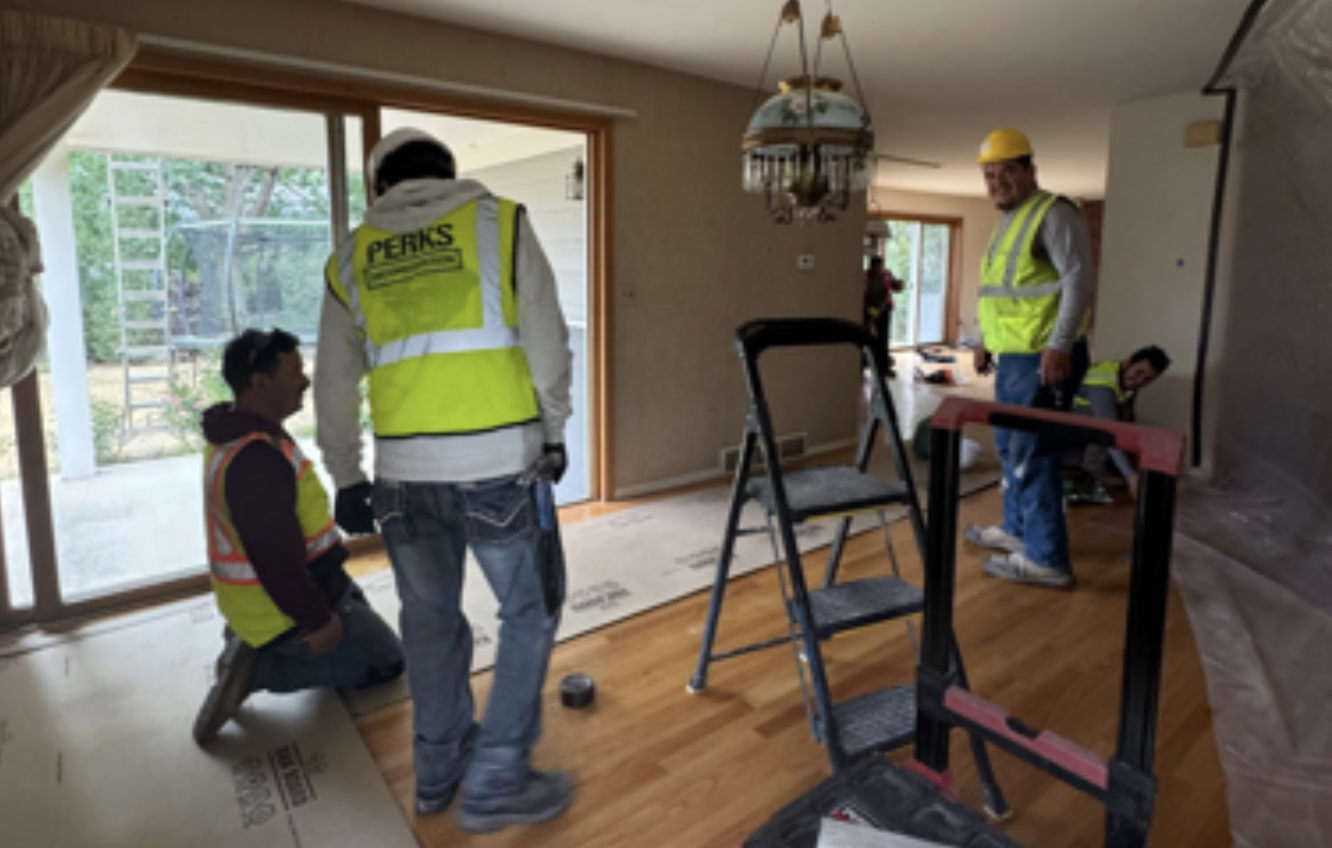
Perks Deconstruction crew setting up site protection on a residential project in Denver, Colorado
When a demo crew goes dark, general contractors do not just lose a subcontractor. They lose schedule days, client trust, and usually some money on rework they did not budget for. Poor communication from a residential demolition contractor is not a soft problem. It is a hard operational cost that shows up on every project where it happens.
This post looks at what communication failures actually cost on residential demolition projects, and what a subcontractor who has this figured out looks like in practice.
WHAT HAPPENS WHEN A DEMO SUB GOES DARK
A residential demolition contractor who does not communicate well creates problems that compound quickly. A few scenarios that come up regularly on residential projects:
The crew does not show up and no one calls. The general contractor finds out when their framers show up to a site that has not been cleaned. Now they are paying framers to wait, or rescheduling a trade that may not come back for two weeks.
Scope changes happen without a conversation. Something that was supposed to stay got pulled, or something that needed to go was left behind. The GC hears about it from the homeowner, not the crew.
Cleanup gets left for someone else. The site is not broom-clean when the crew leaves. The GC is now coordinating cleanup on top of everything else, or having that conversation with the homeowner before the next trade arrives.
No one is reachable when a question comes up. The homeowner has a question about something they noticed. The general contractor calls the demo sub. No answer. Now the GC is managing a client concern without the information they need.
None of these are catastrophic in isolation. But they stack. And on a high-end residential project, where the homeowner is involved and the GC's reputation is on the line, they stack fast.
WHAT POOR COMMUNICATION FROM A RESIDENTIAL DEMOLITION CONTRACTOR ACTUALLY COSTS
The cost is not just inconvenience. General contractors absorb real dollars when a demo sub does not communicate well. A delayed start pushes trades. Pushed trades mean rescheduling fees or gaps in the schedule that are hard to close. Rework or something the crew damaged or missed comes out of someone's budget. A client complaint costs relationship capital that took years to build.
GCs who work with reliable residential demolition contractors do not think about any of this. That is the actual value of a sub who communicates well. The project just runs. Demolition gets done, the site is handed off clean, and the GC moves on to the next phase without a cleanup call or a framer sitting idle.
WHAT COMMUNICATION LOOKS LIKE WHEN A DEMO SUBCONTRACTOR HAS IT FIGURED OUT
Good communication from a residential demolition contractor is not complicated. It is consistent. Here is what it looks like in practice:
There is a designated point of contact for every job. On larger projects that is a project supervisor. On smaller jobs the foreman takes point. Either way, the building contractor knows exactly who to call and that person picks up.
The plan gets communicated before work starts, not after. Scope gets walked before anything is touched. Changes from the original estimate get flagged before the crew acts on them, not discovered after.
The crew checks in at whatever frequency the GC needs. Some residential general contractors want daily updates. Some want a call only if something changes. A good demo sub figures out the preference early and stays consistent with it.
There is a final walkthrough before the subcontractor leaves. Not because the GC asked for it. Because that is how the job ends. The GC confirms the site is clean and complete before the next trade comes in. No surprises.
Internal logs mean nothing falls through the cracks. These are not client-facing. They are how the crew stays organized internally. Daily logs, photos, and material tracking that mean a question asked three weeks later can be answered with a record, not a guess.
WHAT TO ASK BEFORE YOU HIRE A RESIDENTIAL DEMOLITION CONTRACTOR
You can usually tell how a demo sub communicates before the job starts by how they communicate during the bidding process. A few questions worth asking:
Who is my point of contact during the job and how do I reach them?
How do you handle scope changes that come up mid-job?
What does the site handoff look like at the end of the job?
Can you walk me through how you handled a situation where something unexpected came up on a job?
How a contractor answers those questions tells you more than their price does.
HOW PERKS DECONSTRUCTION HANDLES IT
Perks works with general contractors across the Denver metro area, Boulder, Lakewood, Aspen, and the broader Front Range on residential deconstruction, selective demolition, and material salvage. The general contractors we work with regularly do not need to follow up to know what is happening on a job. That is by design.
Every project has a designated point of contact. Scope gets walked and confirmed before work begins. We communicate throughout the job at whatever frequency the building contractor needs. At the end, we do a final walkthrough to confirm the site is clean and complete before we leave.
If you want to see what that looks like on a real job, we are happy to talk through how we work before your next project starts.