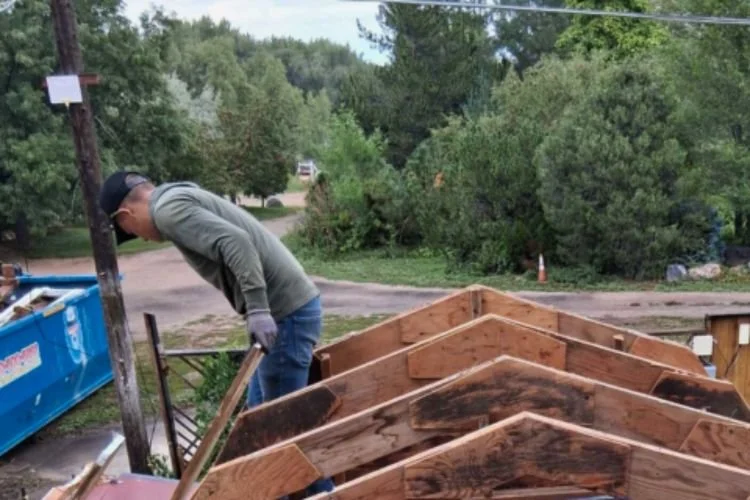
Perks Deconstruction crew working on a residential deconstruction project in Cherryvale, Boulder
September 1, 2026 is closer than most contractors realize. Denver's updated Waste No More ordinance goes into full enforcement that day, and for GCs and commercial contractors pulling Denver demolition permits, the rules are changing. If you have not started thinking about this yet, now is the time.
This post covers what the ordinance actually requires, how the deposit program works, what documentation you will need, and why getting your deconstruction partner lined up before September matters.
WHAT THE ORDINANCE ACTUALLY REQUIRES
Waste No More is Denver's Universal Recycling and Composting Ordinance, passed by voters and now entering full enforcement. For demolition permit applications submitted on or after September 1, 2026, here is what applies:
Which projects are covered: Construction and demolition projects involving spaces over 500 square feet, and interior renovations covering more than 2,500 square feet.
Diversion threshold: Contractors must divert at least 50 percent of leftover materials from the landfill. Covered materials include concrete, asphalt, masonry, untreated wood, metal, and corrugated cardboard. That threshold rises to 65 percent in 2036.
Recycling and Reuse Plan: All projects must submit a Recycling and Reuse Plan to the city before a construction or demolition permit will be issued.
Compliance documentation: Before final inspection, contractors must submit a Recycling and Reuse Compliance Form verifying actual diversion results, including what was salvaged, recycled, and hauled.
HOW THE SECURITY DEPOSIT PROGRAM WORKS
This is the part that gets most contractors' attention. For Denver demolition permit applications submitted on or after September 1, 2026, a performance security deposit is required before work begins. For the largest projects, that deposit can reach $200,000.
The deposit works as a performance incentive. Hit the 50 percent diversion threshold and document it properly, and you recover the full deposit. Fall short, and you get back only a portion of it or none at all.
The city has been clear that enforcement will start with an education-first approach. Officials plan to work with contractors before resorting to financial penalties or permit actions. That said, the deposit requirement applies from day one of the new enforcement period.
WHAT DOCUMENTATION YOU WILL NEED
Documentation is where most contractors get caught off guard. The Compliance Form requires real records, not estimates. Here is what you need to have in hand:
Weight tickets or receipts from recycling facilities showing materials delivered
Records of salvaged materials going to reuse destinations such as Perks Reclaimed
A material manifest tracking what was purchased, what was diverted, and what went to landfill
The approved Recycling and Reuse Plan submitted before the demolition permit was issued
Your demolition or deconstruction subcontractor should be ready to provide this paperwork as part of their process, not leave you to chase it down after the job wraps.
WHAT THIS MEANS ON THE JOBSITE
Meeting a 50 percent diversion threshold is manageable when you have the right partner in place before demo starts. It is significantly harder to back into compliance after the fact.
A few things that make a real difference in practice:
Scope your salvage plan early. Materials deconstructed carefully and sorted on-site are much easier to document for compliance than materials mixed into a dumpster and sorted later.
Know which materials count. Concrete, asphalt, masonry, untreated wood, metal, and corrugated cardboard are the primary diversion categories contractors should understand when planning for compliance. Understanding the material composition of a structure before demo begins lets you plan and set realistic expectations.
Factor in permit timing. The Recycling and Reuse Plan has to be submitted before the Denver demolition permit is issued. If your demo subcontractor is not familiar with this process, that is a delay you do not need.
Get your subcontractor lined up now. Schedules fill up before major regulatory deadlines. Waiting until August leaves you with fewer options and less time to plan properly.
HOW PERKS DECONSTRUCTION SUPPORTS DENVER DEMOLITION PERMIT COMPLIANCE
Perks has been working within Denver's Waste No More framework since the initial plan submission requirements went into effect. We handle the Recycling and Reuse Plan as part of our process, sort and salvage materials on-site, and provide the documentation you need for your Compliance Form.
Salvaged materials from Perks job sites go directly to Perks Reclaimed, our warehouse in Commerce City, where they are donated for reuse whenever possible. Donating quality materials for reuse helps keep them out of the landfill while providing a documented, traceable destination that supports your diversion totals.
If you have a project coming up in the next few months, reaching out now gives us time to walk through the scope, build the plan, and make sure everything lines up before September 1.
TALK TO US ABOUT YOUR PROJECT BEFORE SEPTEMBER
This is the first post in a three-part series on Denver's construction waste compliance requirements.