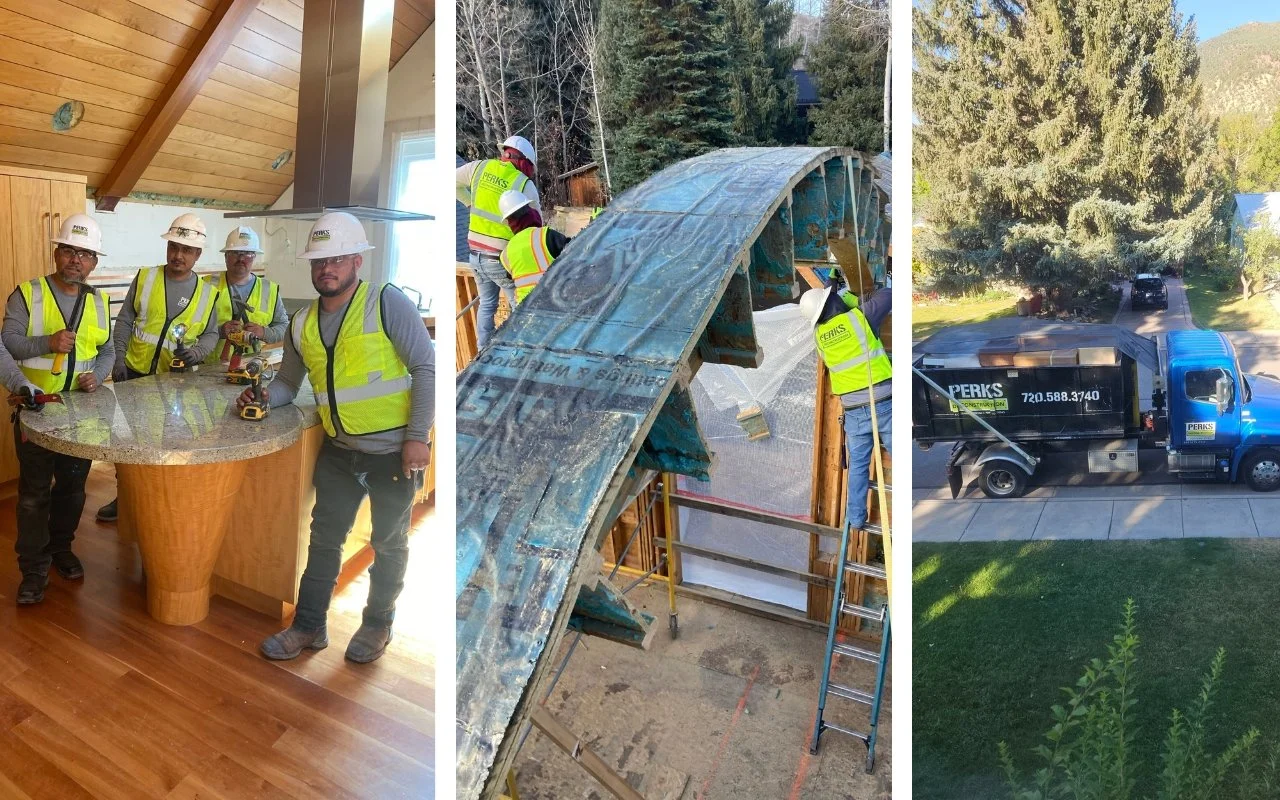
Perks recently completed a selective residential deconstruction project in Aspen, where tons of building materials were recovered for reuse and recycling
As Aspen, Colorado raises the bar on sustainability, its new construction and demolition requirements are putting deconstruction and material reuse front and center. The city now expects C&D projects to separate and divert recoverable building materials, reducing waste and supporting a more circular construction economy.
For general contractors and builders, these rules change how jobs are planned and run, especially on remodels and teardowns. With the right systems and partners, though, complying with Aspen’s ordinance can be straightforward and can keep a surprising amount of material in circulation.
What Aspen’s Construction and Demolition Requirements Do
Aspen’s C&D debris diversion ordinance applies to permitted projects with more than 2,000 square feet of disturbance area. That number includes both the building work area and any soil disturbance, so most substantial remodels, additions, and new builds in town will qualify.
If your project is covered, you’re required to:
Separate “recoverable” materials on site
Send those materials to reuse, recycling, or other recovery options instead of the landfill whenever feasible
Materials that fall under Aspen’s construction and demolition requirements include:
Concrete, asphalt, rock, and dirt
Metal and metal appliances
Untreated lumber and pallets
Corrugated cardboard and single-stream recyclables
Organics and porcelain fixtures
To track all of this, Aspen uses Green Halo, a web-based waste-tracking platform. Before permit review, builders create a Green Halo account and set up a project. During the job, landfill and diversion tickets are logged by material type. Aspen helps this along with a QR code system at the landfill that automatically uploads tickets into Green Halo, which cuts down on manual data entry.
There’s also money on the line: projects post a refundable deposit based on expected debris tonnage. To get that deposit back at final inspection, a project must hit at least 50% diversion by weight. Loads of mixed trash that contain recoverable materials can trigger penalties and make it harder to reach that threshold.
What This Looks Like on a Real Deconstruction Project
Perks Deconstruction recently completed the interior phase of a deconstruction project at a historic home in downtown Aspen that had been remodeled several times over the years. Our scope was to gut the interior, taking everything down to the framing and exterior sheathing, while salvaging as much material as possible for reuse and recycling.
A few takeaways for builders working under Aspen’s rules:
Space planning is key. On this project, we used a landfill dumpster on site and a dump trailer dedicated to specific streams — clean wood, metal, and other recyclables — which we hauled out as we worked. On tighter sites, planning container placement and haul schedules makes a big difference.
Not every material behaves the same in deconstruction. We were able to pull multiple loads of materials for salvage and reuse. Other elements were more challenging. Glued-down hardwood flooring didn’t come up cleanly enough to be realistically salvaged. Spray foam insulation, while helpful for energy efficiency, made it much harder to recover clean lumber from wall and roof assemblies.
Data tracking can be handled for you. On Aspen jobs, Perks manages Green Halo for clients, reviews tickets to make sure materials are categorized correctly, and keeps waste data organized from start to finish.
We also coordinate with Habitat for Humanity in Carbondale and other reuse partners so that high-quality materials find a second life, and so builders have more options to meet diversion goals and qualify for their deposit refund.
Why This Matters for Builders Across Colorado
Aspen is part of a broader shift in Colorado toward higher C&D diversion and more deconstruction-focused practices. Communities across the state, including Summit County and Boulder County, are looking at how construction and demolition requirements can cut landfill use, reduce greenhouse gas emissions, and support local reuse and recycling businesses.
For general contractors, design-build firms, and owners, that means planning for deconstruction and diversion is becoming a standard part of project delivery, not an afterthought.
Perks Deconstruction helps Colorado builders navigate these changes by:
Designing material sorting, salvage and hauling plans
Handling Green Halo waste tracking and documentation
Maximizing reuse opportunities and coordinating donations
Helping projects meet or exceed local construction and demolition requirements so that building owners receive their deposit refunds
If you’re planning a project in Aspen or elsewhere in Colorado and want to understand how deconstruction and C&D diversion requirements will affect your scope, schedule, and budget, our team is here to help.