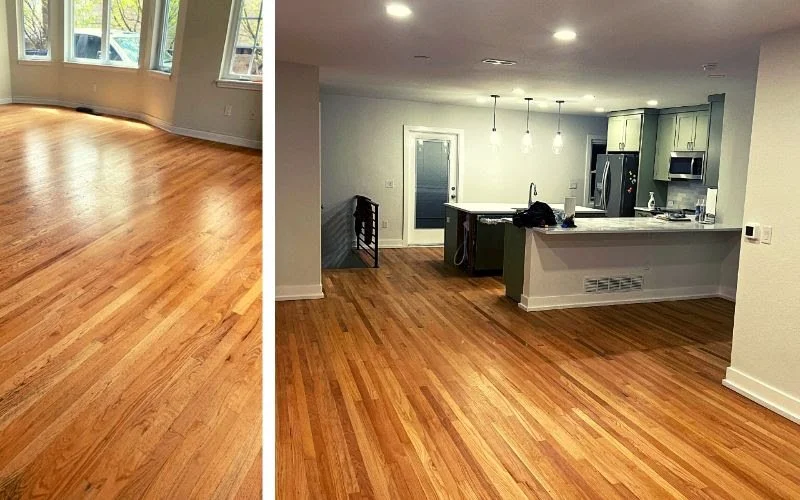
Denver-based Sustainable Design Build used reclaimed hardwood flooring from our Warehouse for a new client project that needed additional flooring to complete a room. They installed 250 sq ft of beautiful reclaimed red oak flooring and then refinished the entire room. They were pleased to find that the new and reclaimed flooring blended together perfectly.
During a recent Perks Reclaimed tour with a group of interior designers, one of them asked: Do you have something I can show my clients so they can see what reclaimed flooring looks like once installed?
It’s a great question, and we’re excited to hear it because reclaimed wood flooring can be a cost-effective, beautiful way to incorporate sustainable materials into a project. Real wood adds charm and character to a space, and older, high-quality wood like oak and pine are common reclaimed options. Wood flooring is one of our more common salvaged items because it withstands repeated use, is easy to install, and retains quality and value over time.
By installing reclaimed flooring, you can add warmth, texture, and a sense of history to a space. However, using it can be a little different from using new hardwood. Here are a few things that are helpful to know upfront.
What reclaimed flooring really looks like
Reclaimed flooring usually has natural variation in color, grain, and texture. That variation is part of what gives it character. Even when boards are sorted into a matching bundle, you will still see differences from plank to plank. The finished floor tends to feel layered and lived-in rather than perfectly uniform.
Most installers will lay boards out ahead of time to balance tones and grain across the room. That small step goes a long way toward making the result feel intentional and cohesive instead of busy or random.
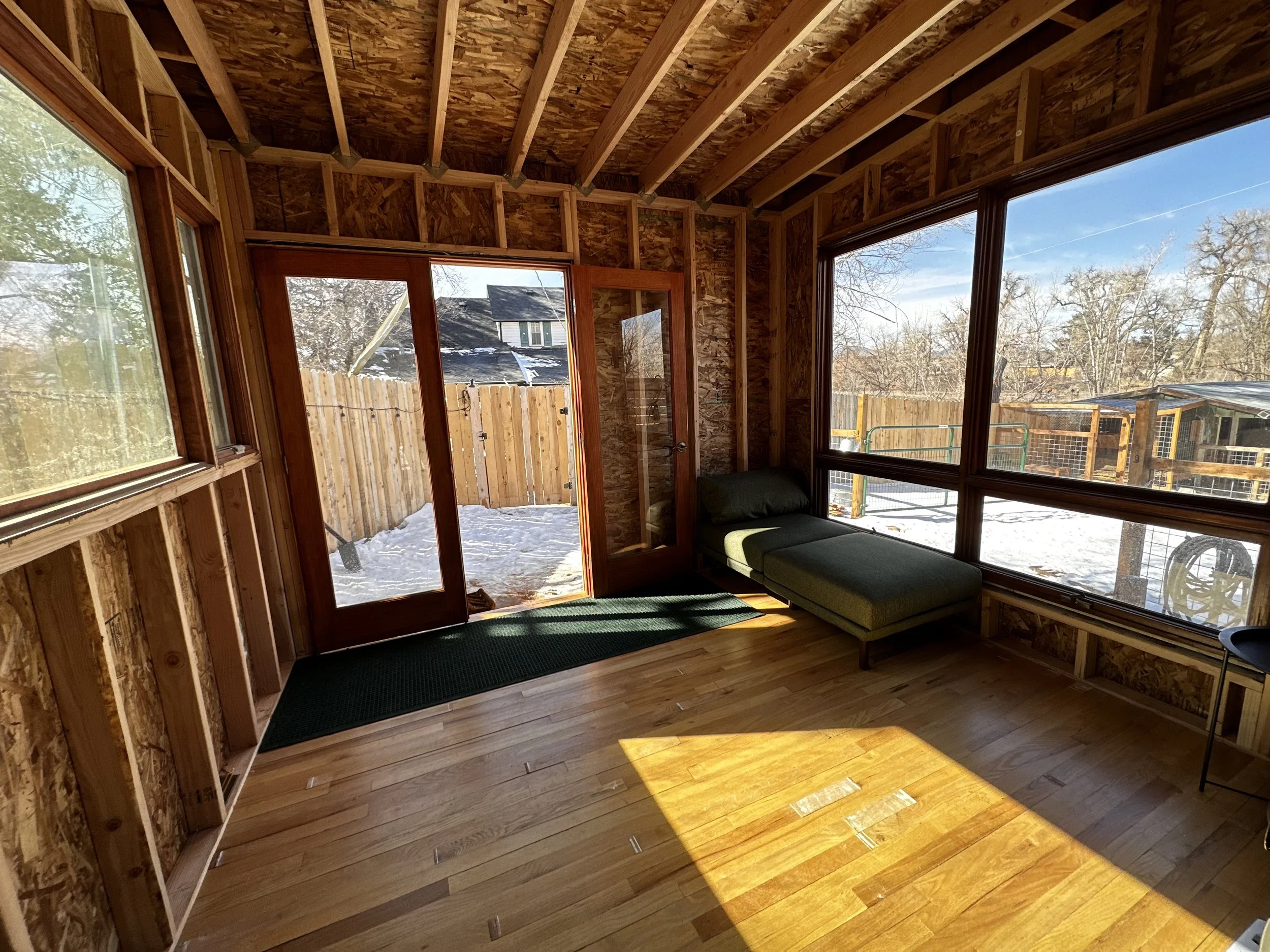
A customer recently built an office and sunroom with help from materials from Perks Reclaimed, including reclaimed flooring, doors, and windows.
It installs a little differently than new hardwood
Reclaimed wood has already lived a life, often in buildings without modern heating and cooling. Because of that, it can be more sensitive to humidity changes. Letting the flooring sit in the space where it will be installed for a week or two helps it adjust and reduces surprises later.
Subfloor prep also matters more than people expect. A clean, dry, level subfloor makes the install smoother and helps avoid gaps or uneven spots. None of this is unusual for hardwood, but it matters more when boards are not perfectly uniform.
Expect a little more time and planning
Installing reclaimed flooring usually takes longer than installing new hardwood. Old wood can be harder and more brittle, and installers often move more slowly to avoid splitting boards. Layout also takes extra time, since color and grain are part of the design.
It’s also smart to order extra material. Reclaimed boards sometimes need trimming, and having a buffer gives installers flexibility to keep the final layout looking balanced. When we salvage hardwood flooring, we remove existing fasteners before reuse. Depending on how the floor was originally installed, we either use a denailing gun to punch out nails or, if staples are present, an angle grinder to grind them flush. Because staple heads can sometimes remain embedded in the tongue of the board, it’s important during reinstallation to identify their locations and avoid installing directly on top of them.
Finishes make a big difference
Reclaimed wood absorbs stain and finish differently than new wood. A clear coat keeps things light and natural, while an oil finish can deepen color and highlight texture. Testing a finish on a few boards first is one of the easiest ways to avoid surprises.
Depending on the condition and type of reclaimed flooring, it may be possible to reuse the existing finish without recoating. In other cases, it’s good practice to plan on sanding the floor and applying a new stain and finish to achieve a consistent, long-lasting result.
Why examples help so much
What we’ve seen again and again is that clients feel much more comfortable choosing reclaimed flooring once they’ve seen real examples. A few installed photos, close-ups of texture, or a short install video do more to set expectations than any technical explanation ever could.
Seeing real projects helps people understand both the beauty and the character that come with reclaimed wood floors.
Where to find reclaimed flooring that’s ready to install
If you’re looking for reclaimed wood flooring that’s been cleaned, de-nailed, sorted, and bundled for a consistent look, our reclaimed materials shop Perks Reclaimed prepares reclaimed flooring for reuse from local deconstruction projects. You can see current inventory at perksreclaimed.com.