What Is Deconstruction in Construction and How Is It Different From Demolition?
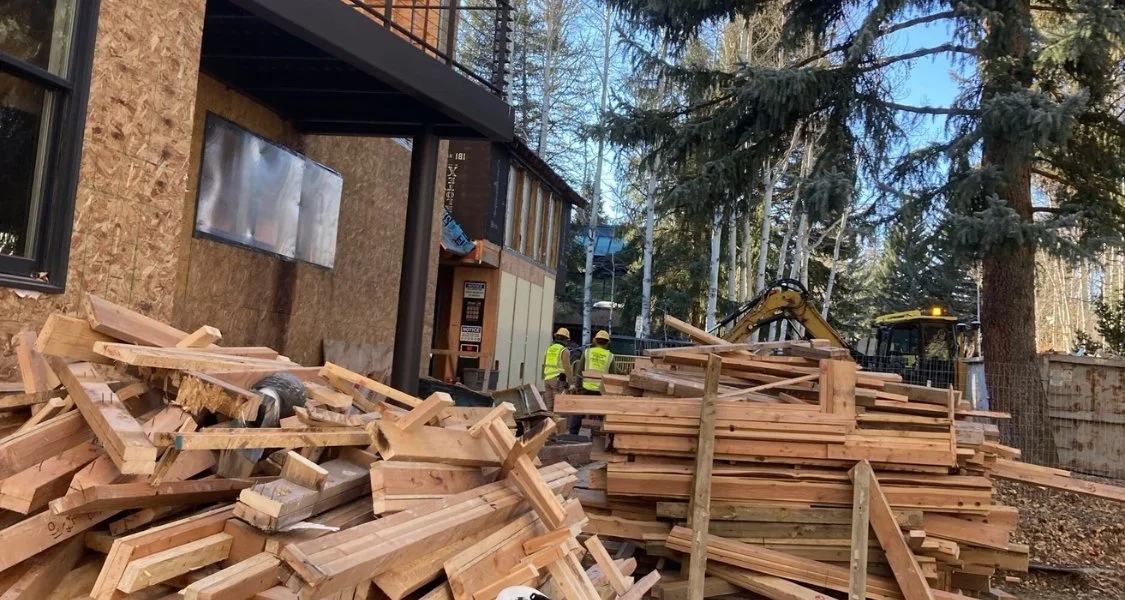
Wood being salvaged from a house deconstruction project in Boulder, Colorado
When most people think of demolition, the image is pretty familiar: heavy equipment bulldozing a structure, debris piling up, and dumpsters hauling broken materials away to a landfill. Traditional demolition prioritizes speed. Buildings are knocked down quickly so construction can begin.
But there’s another approach.
Deconstruction in construction is the careful, step-by-step dismantling of a building so materials can be reused, recycled, or donated. Instead of destroying everything at once, crews remove materials methodically so they can remain intact and useful. This process takes more care, but it dramatically reduces landfill waste and helps keep valuable building materials in circulation.
Deconstruction vs. Demolition: What’s the Difference?
Both demolition and deconstruction remove buildings, but the approach and outcomes are very different.
Deconstruction
Buildings are dismantled carefully
Materials are salvaged for reuse or recycling
Reusable items are often donated to nonprofits
More labor-intensive, but environmentally responsible
Demolition
Structures are torn down quickly using heavy equipment
Materials are mixed together as debris
Most materials go directly to landfills
Prioritizes speed over material recovery
Because of this difference, deconstruction can divert a large portion of building materials away from landfills.
Construction & Demolition Waste in Colorado
Construction and demolition (C&D) debris represents a significant portion of landfill waste in Colorado.
According to Recycle Colorado:
C&D materials make up about 25% of the solid waste generated in the state
Depending on the region, they represent 25–60% of landfill material
Approximately 90% of that waste comes from demolition
That’s a staggering amount of reusable material being buried every year. Deconstruction offers a way to reduce that impact by recovering materials before they become waste.
The Sustainable Alternative to Demolition
Thankfully, there is a more environmentally responsible option for removing homes and buildings.
Deconstruction approaches demolition with a salvage-first mindset. Instead of treating materials as disposable, crews work to reuse and recycle as much as possible. The process is systematic and more methodical, but the benefits extend beyond the jobsite.
Deconstruction helps reduce landfill waste, preserve usable building materials, support reuse markets, and provide tax-deductible donations for homeowners and contractors.
Because materials are removed carefully rather than smashed, deconstruction sites are typically cleaner and produce less dust and disruption than traditional demolition.
How Deconstruction Works
Deconstruction takes a surgical approach to dismantling buildings. Instead of knocking a structure down all at once, crews “unbuild” it in the reverse order it was constructed. This allows materials to stay in the best possible condition so they can be reused or repurposed later.
Typical steps in a deconstruction project include:
Removing appliances, fixtures, and cabinetry for donation
Carefully removing doors, windows, and flooring
Salvaging dimensional lumber and structural materials
Separating recyclable materials like metal and concrete
Coordinating pickup with nonprofit partners or transporting materials to reuse facilities
At Perks Deconstruction, we work with a network of ethical recyclers and nonprofit organizations to divert as much material as possible from the landfill. These partnerships also help maintain a steady supply of reclaimed building materials for local green building efforts.
What Structures Can Be Deconstructed?
Deconstruction can apply to a wide range of projects. These include full residential home removals, garages and accessory structures, interior commercial projects, kitchen and bathroom remodels, and other residential remodels.
Even smaller renovation projects can produce valuable reusable materials like cabinets, appliances, flooring, and fixtures.
Donating Used Building Materials
One of the most important parts of deconstruction is keeping usable materials in circulation. Instead of using a sledgehammer to remove cabinets or countertops, crews carefully detach them using drills and other tools so they remain intact.
Common items recovered during deconstruction include:
Cabinets and countertops
Appliances
Vanities and plumbing fixtures
Lumber and flooring
Lighting fixtures
At Perks Deconstruction, reusable goods are donated to nonprofit reuse organizations such as Resource Central, Bud’s Warehouse, and The National Center for Craftsmanship, or they’re resold at our retail shop Perks Reclaimed. These donations may qualify for tax-deductible write-offs for homeowners and contractors.
Our crews also take the extra step of de-nailing lumber and flooring, which helps ensure the material can be reused safely.
Reclaimed Materials = More Affordable Building Supplies
Reclaimed building materials are often sold at a fraction of the cost of new materials. That makes reuse not just environmentally responsible, but also more accessible.
By keeping materials in circulation locally, reuse also reduces the pollution associated with mining raw materials, manufacturing new products, and transporting building supplies long distances. In short, reuse supports a more circular building economy.
Spread the Word
At Perks Deconstruction, we’re working to increase awareness of deconstruction as a practical alternative to demolition. We encourage homeowners, contractors, builders, and DIYers throughout the Denver Metro, Boulder County, and Front Range areas to consider reclaimed materials and salvage-first demolition practices.
If you believe in reducing waste and building more responsibly, help spread the word by sharing and following along on Instagram.
Frequently Asked Questions About Deconstruction
Is deconstruction more expensive than demolition?
Because deconstruction focuses on carefully dismantling materials for reuse and recycling, it can take more time than conventional demolition. The overall cost depends on factors like the size of the project, the types of materials being recovered, and disposal requirements. In some cases, potential tax deductions from donated materials can help balance the difference.
What types of materials can be salvaged during deconstruction?
Many building materials can be recovered during the deconstruction process, depending on the condition of the structure. Commonly salvaged items include lumber, doors, flooring, cabinets, appliances, hardware, lights, and fixtures. Materials like concrete, brick, and tile can be recycled. Learn more about what happens to our materials.
Can entire homes be deconstructed?
Yes. Many single-family homes, garages, and commercial buildings can be fully or partially deconstructed depending on the structure and project goals. We have worked on house deconstruction projects that have had up to 90% waste diversion.
When should deconstruction be planned in a project timeline?
Deconstruction is most effective when it is considered early in the project planning process. This allows time to coordinate permits, salvage planning, and scheduling so materials can be recovered efficiently before new construction begins.
Is deconstruction required in some cities?
Some cities and counties have adopted policies that encourage or require deconstruction for certain types of projects, particularly older homes. These policies are intended to reduce construction and demolition waste and increase opportunities for material reuse.
In Colorado, cities like Denver, Boulder, Aspen, Lakewood, and Fort Collins have all implemented reuse and recycling policies for building material waste. Learn more.