By Anna Perks, Founder and Co-Owner of Perks Deconstruction
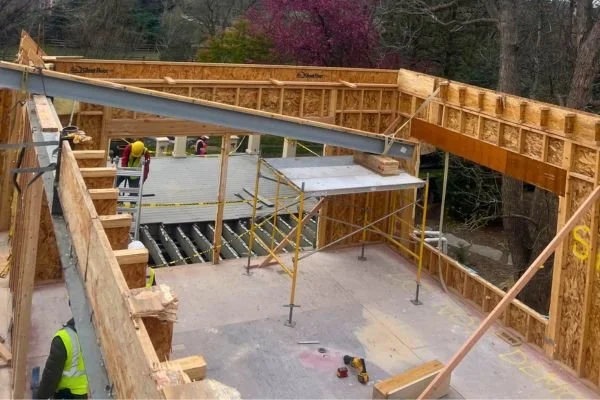
A house deconstruction project in south Denver
When people hear “deconstruction,” the first thing they think of is keeping materials out of the landfill. That’s part of it, but it’s only one piece of a much bigger picture.
Every material we throw away has to be replaced. Concrete, glass, metal, wood, fixtures, finishes, all of it comes from somewhere. Getting those materials takes work. It means extracting raw resources, building access roads, processing them, and then transporting them, often long distances, before they ever make it to a job site here in Colorado. All of that has an environmental cost, even if we don’t see it directly.
Deconstruction changes that equation. When we take a structure apart instead of demolishing it, we’re typically able to keep around 75% of the material in circulation through reuse or recycling. That reduces the need for new materials and keeps more value in the local economy instead of sending it to the landfill. It also shifts perspective a bit. Once you see how much can be saved, it’s hard to look at demolition the same way.
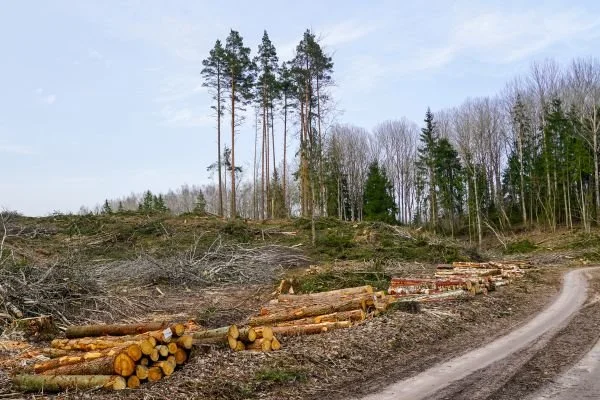
Deconstruction practices result in lumber being salvaged and reused, lessening the need to extract finite, natural resources
Some of the benefits are less obvious but just as important. Air quality is one of them. Mechanical demolition creates a lot of dust, and in some cases that dust contains harmful materials. Studies in cities like Detroit have shown that lead dust from demolition can spread to neighboring homes, which has real impacts on the surrounding community.
With deconstruction, materials are removed more carefully. If lead-based materials are present, they’re handled by licensed professionals in a way that reduces exposure and limits the spread of dust. The same goes for asbestos. It’s supposed to be identified and abated before demolition, but that process doesn’t always catch everything. In some cases, deeper layers of materials, like older flooring beneath newer layers, aren’t tested. When a building is demolished, those materials can become airborne. With deconstruction, because we’re taking things apart piece by piece, it’s more likely those materials are uncovered and handled properly.
Concrete is another big piece of the puzzle. Portland cement is one of the most energy-intensive materials used in construction and carries a significant carbon footprint. Reusing concrete in place isn’t usually practical, but recycling it into aggregate is the next best option. That keeps it in circulation locally and reduces the need to extract new raw materials.
We use tools like the EPA’s WARM model to better understand the impact of material diversion. Last summer, we worked on a bathroom remodel project at CU Boulder where we deconstructed 12 bathrooms in a sorority house. We removed and recycled about 800 square feet of tile, roughly 5,800 pounds of material. That translated to about 0.26 metric tons of CO₂ emissions avoided, about the same as a month of electricity use for an average U.S. home, along with landfill space saved and conservation of natural resources like stone and gravel.
It wasn’t a large project. We completed it in three days. But the impact was still meaningful. That’s what stands out. If that kind of impact comes from a relatively small job, it adds up quickly when you think about the scale of construction and demolition happening every day.
Since 2019, we’ve diverted over 10 million pounds of material from the landfill through deconstruction and material recovery. That hasn’t come from one or two large projects. It’s come from consistently choosing to take buildings apart more carefully, sorting materials, and finding a next use for what would otherwise be thrown away.
Deconstruction isn’t always the easiest option, but it’s a better one. It reduces waste, lowers demand for new resources, limits environmental and health impacts in surrounding communities, and keeps materials in use longer.
And even on smaller projects, it still makes a difference.
Interested in deconstruction for your next project? Reach out to our team to learn more.