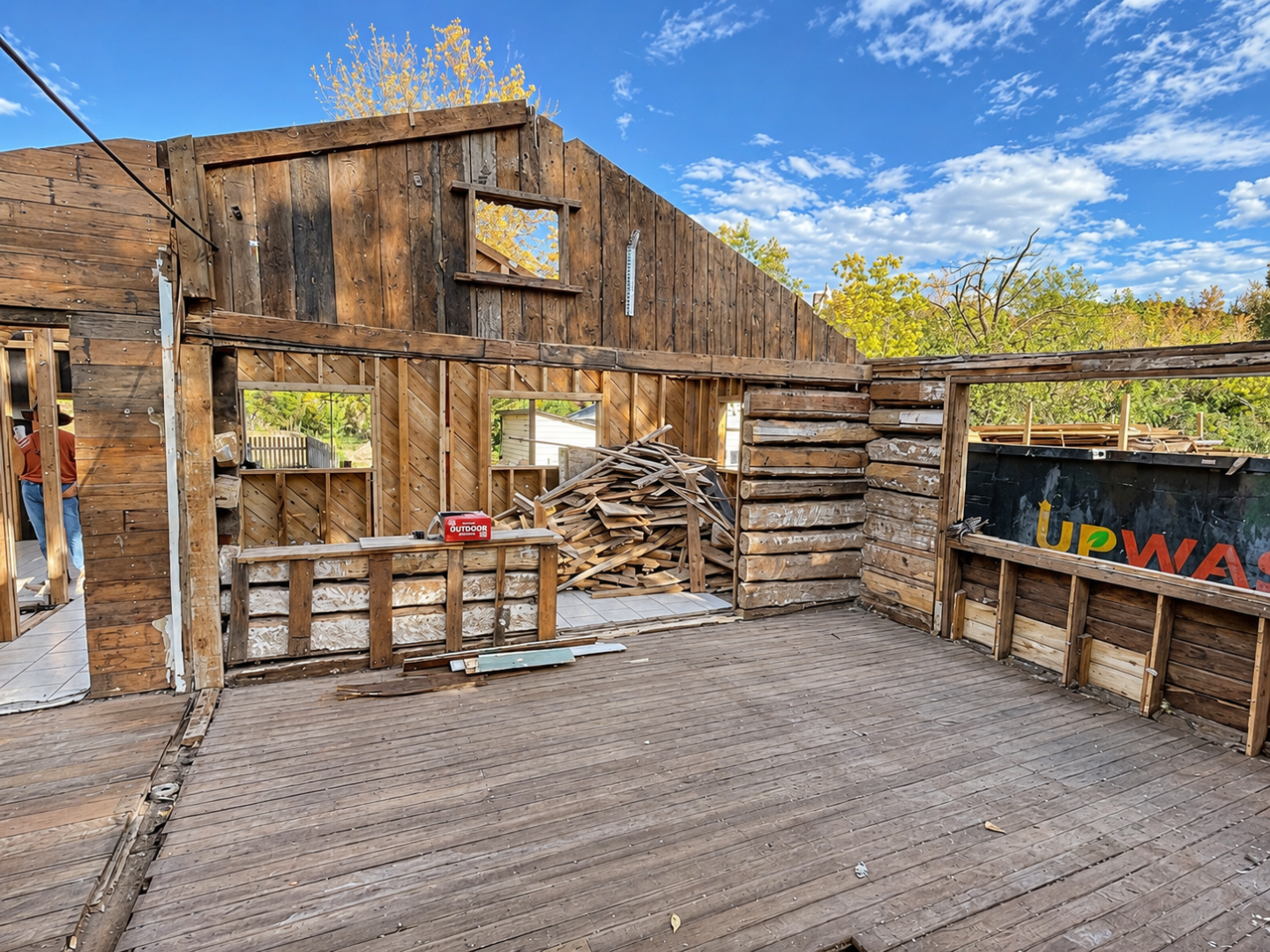
Deconstruction in action: Salvaged lumber collected on-site during the careful dismantling of an existing structure.
Denver's waste ordinance requiring construction and demolition recycling has been in effect since September 1. For general contractors and commercial contractors, the question is no longer what the ordinance says. It is what it takes to get a project through it and get the deposit back.
This post covers where deposit recovery can get lost and how to fix each gap before your next permit goes in. These are practical corrections, not criticism. The process is new for everyone.
WHERE DEPOSIT RECOVERY GETS LOST IN DENVER WASTE ORDINANCE COMPLIANCE
Deposit recovery comes down to the plan you submit and the records you keep. Here are the gaps that put it at risk, with a fix for each.
Treating the Waste Diversion Plan as a permit formality. The plan has to be submitted and approved in Green Halo before the permit issues, and the deposit comes due after approval. It also names the facility or reuse method for each material, so build it around how the job will actually run.
Aiming for the percentage and missing the material types. The target is 50 percent of debris by weight, and the diversion has to span at least three covered material types. Covered materials include concrete, asphalt, masonry, metal, untreated wood, and corrugated cardboard, along with reusable items.
Waiting until closeout to gather tickets. Denver asks for weight tickets and other diversion documentation in Green Halo within 60 days of project completion and permit final. Collect each ticket as the load leaves the site and upload as you go, so the final submittal is a check, not a scramble.
Leaving salvage and donations undocumented. Reused material needs a record of where it went, just like recycled material does. Get a receipt or transfer record from the destination for every salvage or donation load.
Overlooking who holds the permit. Denver sends the refund to the contractor who holds the permit, even if someone else paid the deposit. Settle that in the contract before the application goes in.
Guessing which side of September 1 a project falls on. The requirements apply to applications first submitted on or after September 1, 2026. Work already in plan review or under permit before that date is not required to submit a plan.
A SIMPLE CHECKLIST FOR YOUR NEXT PERMIT
Run through this before the application goes in:
Decide who prepares the Waste Diversion Plan and who holds the permit.
Name the facility or reuse destination for each material before the demo starts.
Set up sorting and containers on day one so loads can be weighed and ticketed by material.
Upload tickets and reuse receipts to Green Halo as they come in.
Put the 60-day deadline on the calendar the day the permit finals, then submit for final.
The city has said it is taking an education-first approach, but the deposit and the documentation window apply from the start.
HOW PERKS DECONSTRUCTION SUPPORTS DENVER’S WASTE ORDINANCE COMPLIANCE
On our jobs, sorting is part of the plan from day one. We separate materials on site, track where each load goes, and provide the documentation that supports your diversion records.
Salvaged materials from our job sites go to Perks Reclaimed, our warehouse in Commerce City, so they stay in use. If you have a project coming up, we are happy to talk through how the process would work on it before your permit application goes in.
This is the third and final post in a three-part series on Denver's construction waste compliance requirements.